Moore Than This

"Here we are living in paradise, living in luxury..."

Friday, September 15, 2006

Baggy trousers - not just for Madness

From newly-discovered PingMag (The Tokyo-based magazine about "Design and Making Things"), a piece on Japanese construction worker fashion. During my time in Japan, I would see construction and maintenance crews everywhere, all wearng much the same regalia - hard hats, overalls, very wide, baggy trousers and tabi (Japanese two-toed shoes). I was intruiged by the baggy trousers most of all, as I'd have thought they would get in the way. But this article says otherwise:
There are various theories why the lower part under the knee is pumped up like a balloon. The main reason, however, seems to be a simple one: the baggy pants make it easy to move, easy to bend, stretch and stride.

Other explanations can be, that when working on very narrow scaffoldings high up in the air, it is good to have some kind of sensor: the balloon part of your trousers touches obstacles before your legs do, which acts as kind of a warning system without necessarily having to look down. Besides, they can measure the intensity of the wind and the bagginess prevents the fabric from clinging to your leg even when you are sweating. It also works as a cushion when you drop spiky tools onto your body.

Right below the pumped up part, the trousers become narrow again in order to tighten up your calves. Why? Pressing the calves encourages blood circulation and helps you to work longer and to stand for hours without your feet swelling up.
As soomeone who grew up in Cambridge during the whole baggy skate pants craze, I feel weirdly reassured that the fashion survives somewhere.

(Incidentally, I go back to Leeds on the weekend. Not much to say about that at the moment.)

Labels: , , ,

Monday, July 31, 2006

Domo arigato, Professor Roboto!

In homage to the dudes at Mutant Frog - a post that combines Japan and robots!

A Kyoto researcher has built an android which looks almost exactly like him, and has on occcasion sent it into his classes at Osaka University to deliver lectures for him. (Japan, robots and the Kansai region - score!) The print version of the story is especially hilarious, as it includes a small picture of the professor and his robot double. They're eerily similar, but the robot has this cross-eyed scowl, like the puppet Kim Jong-Il in Team America: World Police. Still, the guy has form - he built the team that won the first robot world cup.

Now I think about it, I wouldn't mind having robots delivering lectures to me. And after the recent dispute over UK university workers' pay, neither would those in charge of the universities. Until the army of robo-academics inevitably rises up to crush their human masters, of course. Then workplace relations in academia will be a very different place. What on earth will David Lodge write about then?

Labels: , ,

Saturday, July 01, 2006

JapanBlogging from another continent

Well, I'm back, without too many mishaps. Came across a couple of articles this morning: one from TCS Daily about the Japanese government's efforts to promote patriotism as part of the education system, and one from the Japan Times concerning China and Korea's own issues with history and patriotism. The Marmot's Hole, an excellent blog on Korean affairs, provides some thoughtful commentary on the latter.

The issue of revising Japan's Fundamental Law of Education to encourage patriotism in schools is a long-running controversy. It is unlikely that it will be passed during the Diet's current session, due to continued wrangling between the parties. The last I heard, there was a disagreement between the two parties of the dominant coalition over whether the precise wording should be "love the nation" or "treasure the nation". Apparently, one of them was too overly nationalistic. No, I'm not sure which one either.

So, does Japan have a problem with patriotism? I'm of the opinion that it does - there is still an awful lot of walking on eggshells when it comes to attitudes towards their country. As I've written before, there is a curious tension between ultra-nationalist undercurrents in Japanese society and the general attitude that Japan paid too big a price in the Second World War for a resurgence of the kind of blind chauvinism that was instilled by the authorities through that period.

Thoughout the 1930s and 40s, children were indoctrinated through the education system. The mere suggestion of returning patriotism to the curriculum is enough to make some people worried, as the TCS Daily piece reports:

In Saitama prefecture at least 45 local schools were producing report cards for 6th grade students on "love of country", though officials stress that how to evaluate this is being left up to the schools.

However, despite widespread concerns about juvenile crime and a breakdown in classroom discipline, there are many Japanese who question both whether teaching patriotism is a good idea and whether it is even possible. They argue that it is easy to say you are patriotic just to get a few boxes ticked on a report card, but there is no way of knowing whether you really mean it. Some are also concerned that it will create too restrictive a definition of patriotism that will inhibit students from thinking for themselves.
This is an essential and long-time feature of the Japanese education system - its goal is more to do with "socialising" children and making them into ideal members of society than encouraging personal growth:
The children here are shuttled from school classes to cram class and then to club activities like basketball or kendo. They are exhausted. A friend of mind who teaches in a language school here said that many of the students at her branch look liked they are about to fall asleep in class. Indeed one child did.

Working the kids longer isn't the right way forward, and getting them to be good citizens isn't going to happen by changing school textbooks to gloss over the past. If the government wants young people to be proud citizens then it should provide opportunities for them to do what proud citizens do. Instead of encouraging token gestures and empty words, perhaps schools and parents should be easing some of the incredible pressure on their children to achieve academically and get them involved in their communities through voluntary work. Simply punishing people for not singing the national anthem is more likely to engender resentment and rebellion than pride.
Couldn't agree more. This misguided notion that you can simply tell people to love their country from above is being pushed in Britain as well. The governments of both these countries seem unaware that patriotism - real patriotism - comes voluntarily, and from having things in your country to be proud of.

Labels: , ,

Thursday, June 29, 2006

My Second-Last Day

Last night I went out with some Australian and Japanese students for a few drinks at an izakaya. Which turned into a few drinks and karaoke afterwards. Great fun, and reminds me that karaoke should also get a mention in the previous post. It's hard to believe that by tomorrow I'll be back in the U.K. Still, it's been an amazing nine months.

I will continue to keep an eye on Japan, blog on any news or issues about it that I find interesting, and of course carry on learning the language. For than anything else, the year abroad has reminded me of why I'm interested in Japan. That's definitely going to help with the remainder of my degree. And after that, I'd like to come back here. While my interest has widened to other countries in Asia over the course of this year, I'm pretty sure that Japan will always hold a special place in my heart.

UPDATE: This post from Adamu at Mutant Frog looks back at his experience in Japan. A good read, and sort of says what I was trying to say.

Labels: , , ,

Tuesday, June 27, 2006

Things I will miss about Japan

Partly inspired by Feitclub and quasi's lists of things they would/will miss about Japan, here's a selection of things that make me very sad to be saying goodbye:

Food

Top of the list, as it should be. Before I came, some aspects of Japanese food, such as azuki bean paste, I remembered with trepidation from my last trip. Over the course of this year, I've become a fan of all of them - except natto. Ramen, okonomiyaki, sushi, shabu-shabu, yakisoba - not only are they all delicious, but most are pretty healthy as well. I honestly don't know how I'll get by at home without them. Also, my time in Japan has introduced me to Korean food, which is so good that I resolved to travel to Seoul to try the real thing.

Urban Life

hanami 045

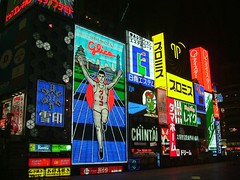
Because I live in a small town with not a lot going on, I enjoy going into Osaka or Kyoto. Osaka definitely has the edge in big-city atmosphere, and I enjoy wandering around Umeda, Shinsaibashi, Namba or Tsuruhashi, experiencing the crowds, the bustle, the crazy arrays of neon lights, and the many opportunities for fun.

Kansai Manners

As I fond out, people from the Kansai region behave quite differently to the traditional view of Japanese people. They're often upfront, direct and pretty in-your-face, which makes for fun conversations. Osaka is renowned for its contribution to Japanese comedy - many comedians on TV speak in Kansai dialect - and you can see some of that humour in how Kansai residents go about their business.

Onsen

I've written a few times before about how much I like Japan's hot springs and public bath houses. They are a fantastic way to relax, and although they're better in winter, I've enjoyed them in all seasons. Although your fellow patrons (at least in the male side) will be on the old side, I have no problem with public nudity. Unless it's done by other people, in which case it's disgusting.

Public transport

train arriving

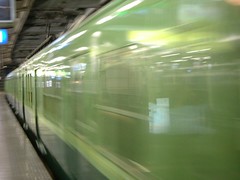
I've done a fair bit of travelling while I've been here, mostly thanks to the cheapness and convenience of public transport over here. In particular, Japan's widespread rail network is very friendly to the student traveller. I've gone by shinkansen three times for some long journeys, but for others, such as trips to Ise and Toba, we took a local train and got amazing views of the Japanese countryside as we trundled through.

Matsuri

danjiri action shot

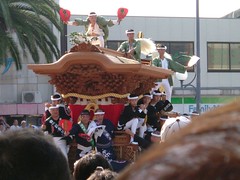
Just as festivals across Europe provide an intruiging glimpse back into our pagan history, Japan's traditional festivals let you look past the usually formal, buttoned-up view of Japanese society. There are family groups, tourists, stalls selling all kinds of food, and usually groups of middle-aged men in traditional happi-coats, who look like they've been drinking heavily all day. At the Kishiwada Danjiri matsuri, which I went to last September, these men were in charge of pulling large floats, or danjiri, round corners at breakneck speed (see above). Nobody died last year, which according to some people was unusual.

TV

On the occasions when the TVs in Seminar House 4 weren't being used by clueless Americans to watch CNN or the Discovery Channel, I loved checking out Japanese TV. Sure, it's renowned for its craziness, and rightly so. But you can also learn quite a lot from it, mostly thanks to NHK, Japan's public broadcasting service, which is second only to the BBC in terms of size. I remember watching a Japanese sign-language program on one of NHK's channels, at prime time on a Saturday evening. I can't think of any other network in the world that would give such a prominent slot to that kind of programming.

My fellow gaijin (and Japanese friends)

group shot, ise

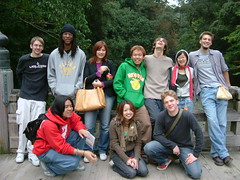
Over the course of this year, I think the greatest help to me has come from the other international students. We were pretty much all in the same boat, and apart from a few exceptions, snobbery over language ability or knowledge about Japan never reared its head. Along with the Japanese friends we made, they were the best support network for finding yourself in a strange country that I can imagine. Together we explored Japan, from remote countryside shrines to city-centre bars, learning about Japan, our own countries and ourselves. It's been brilliant.

Labels:

Wednesday, June 07, 2006

Why Japan?

Some time ago, I came across this link to an exchange student's speech on why he came to Japan. (Note: later found out this guy was also at Kansai Gaidai. Small world, eh? I don't think we spoke at all, though.) Anyway, commenter Mayumi recently asked why I came to study in Japan. This is still a big question for me. I still can't give an exact answer to why I'm studying Japanese, but it's become such a part of my life now that I can't really feel like anything else is as important - not even English, the other half of my degree, and until last year my favourite subject.

I guess part of the answer is luck. The year I chose subjects for my GCSEs, Japanese was on there for the first time. So I picked it, sort of on a whim, because I'd never studied anything like it before and I was curious. I did pretty well, but lost interest in 6th Form, when it was all about constantly revising kanji. I let the spoken language slide, and got through with a decent pass. I'd already applied to Leeds to do English and Japanese, as they were my two favourite subjects and I wanted to continue them.

My academic performance in my first year at uni wasn't exactly stellar - in fact, I ended up having to convince my tutors to let me go on the year abroad. This was partly because due to my previous experience, I didn't take Japanese lessons for the first semester. Once I arrived, everyone had their own social groups and I found it quite hard to fit in. I made friends, but felt like I didn't have much of an investment in my work. So I let things slip.

Of course, once I actually got here, things changed. I had a reason to speak Japanese, to learn Japanese, to engage with everything around me. And once I get back, I'm going to carry on. There's so much I've learned, and so much I want to learn. I only hope I've managed to put a little bit of it across on this blog.

Labels:

Friday, May 05, 2006

Film review, with added politics

Japan has an intriguing relationship with patriotism, nationalism and its military, tied up with its experience of the Second World War and subsequent international policy. There was recently a big stink about changing the Education Law to define patriotism as an aim of the education system, which shows that even discussing it is still a big issue even now.

Japan is a curious country, as you can see outbursts of extreme nationalism in public, and similar views expressed by public intellectuals and political figures. At the same time, while most Japanese are proud of their country and will always ask you what you like best about Japan (trust me on this), they don't go for big outward expressions of patriotism. In that respect, they've got nothing on South Korea. (Then again, if patriotism looked this good in Japan, I'm sure they'd be all for it.)

So, inspired by this very interesting article on representations of the military and nation in recent Japanese films, I decided to rent one of the films discussed in the article: 亡国のイージス, translatable in English as A Lost Country's Aegis. I watched it with English subtitles, but was pleasantly surprised to find that my Japanese was good enough to recognise the occasional rough translation or contraction from the original phrase.

First off, it was a really enjoyable film. An action flick with a conscience, it has a Japanese Self-Defence Forces Aegis-class destroyer taken over by a group of nationalist naval officers, who claim that a country without a military is a country without meaning or identity - the ship they control is merely "a shield for a lost nation". Only the decent, paternal petty officer Sengoku and a gung-ho secret agent stand between Tokyo and the U.S.-developed chemical weapon the ship is carrying.

The nationalists are already in a conflicted position, being assisted in their takeover by some freelance terrorists/commandos from a foreign country. There's an explicit contrast made between the willingness for mass sacrifice of the commandos and Sengoku's determination to prevent loss of life (he only shoots to kill once in the entire film). In this way, the film presents a triumphal view of Japanese military personnel, but without the WWII-era attitudes of heroic sacrifice in a losing cause.

This is summed up in Sengoku's line towards the climax of the film, also the film's tagline: "生きろ! 絶対に 生きろ!" ("Live! Above all, you must live!") The humanist appeal to life over death is for me, one of the more interesting aspects of the resurgence in patriotic attitudes in Japanese film.

EDIT: I just noticed a post on nationalism in Northeast Asia, written about the same time as this post. Although the writer is blogging from Korea, it deals with all three countries in the equation - Korea, Japan and China.

Labels: , , ,

Thursday, April 20, 2006

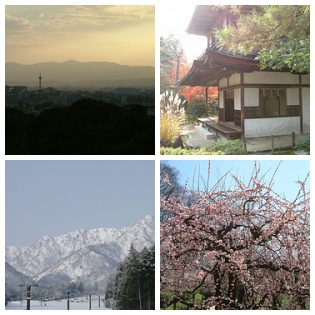
Four Seasons of Japan

Four Seasons of Japan

Thought I'd share this montage with you, created using fd's Flickr Toys. Allowing for some artistic licence - "Winter" (mountain in Nagano) and "Spring" (plum blossom at Osaka castle) were actually taken in March within a week of each other - it's a pretty good indication of why the Japanese are so proud of their seasons.

Labels: ,

Thursday, April 13, 2006

Nationalism, nonsense and other things

I had my presentation this Monday for Issues in Contemporary Japanese Society and Culture. It was on the zainichi Korean population in Japan - the Koreans who came to Japan before the end of World War II, and their desecendants, who are still registered as foreign nationals. Went pretty well, but I still have to do field research. Which, come to think of it, is a good excuse to go to Tsuruhashi again.

Almost all the presentations I've seen so far have made me think, and I like that some people have obviously taken the time to research their topics and come up with new ideas. When I saw that one guy was giving a presentation on Japanese nationalism, I was doubly interested - it's an important subject that says a lot about contemporary Japan.

Unfortunately, this wasn't what we got from the presentation. It was lazy, biased, scaremongering, anti-Japan and woefully under-researched. A little walk-through: it kicked off with the hilarious assertion that Japanese nationalism died out after World War II exclusively because of General MacArthur's Occupation reforms. So, nothing to do with the immense suffering, food shortages, firebombing and two atom bombs, all of which created the intense post-war backlash among the Japanese population against militarism of any sort (which is still strong today).

Then, apparently, Japanese nationalism was recently kickstarted again - by the Americans allowing Japan to use their navy in combat operations. (The closest I can find to this is a law passed during the 2001 war in Afghanistan that allowed Japan's navy to support the US fleet with supply missions.) From hearing his presentation, you would assume that nothing happened in Japan without America's say-so. And if nationalism was dormant for 50 years, how does this guy explain the fact that the 14 Class-A war criminals were included in the dead at the Yasukuni Shrine in 1978? Or the fact that the first Prime Minister to visit Yasukuni did so back in 1985? (Nakasone Yasuhiro, and no, his nationalist outlook didn't get a mention either.) Any kind of deep political change occurs over a long period of time, it does not just snap from one extreme to another.

On the international front he was even odder. Summed up, that bit went: Japan bad, nationalism rising, wants to regain control over Asia. Remind you of anyone? I challenged him on a few of these points after the presentation, and he had nothing to say. I got kind of bogged down in the question of Japan's recent military moves, and was constrained by politeness from doing the kind of point-by-point demolition that I wanted. It's a real shame that a subject with such potential got such a pisspoor treatment. Off the top of my head, I can think of a few Japanese nationalism-related things I'd love to hear about:

Novelist Yukio Mishima, his ultra-nationalism and fondness for samurai chic, his attempt to take over the Self-Defence Forces headquarters with his own private army (seriously), and subsequent ritual suicide.

Kenkanryu, the controversial Japanese manga (the title can be translated as 'the hate Korea wave', a play on words on the 'Korea wave' pop culture boom in Japan). The manga, which has sold about 400,000 copies, puts across a right-revisionist view of Japan's colonial record in Korea. An interesting view of it
here.

Japanese nationalism is not always overt and scary, like the big right-wing sound trucks I've seen in Hirakata and Tokyo. (They were actually kind of a let-down - I thought they'd be much louder than they actually were.) I'm currently watching a film for my Japanese classes about an underdog university sumo team, which is quite interesting in terms of overtones. The sumo team gains members from students who are fed up with American sports, such as pro-wrestling and American football, and a gaijin character who is ignorant of Japanese tradition and relies on brute strength to win has recently been introduced. I suspect he will soon be shown the error of his ways. Would that I could say the same for the guy behind that awful presentation.

Labels: , , , ,

Saturday, April 01, 2006

Apologists, of one stripe or another

A very good post from Adamu at Mutant Frog reflecting on whether or not he is a "Japan apologist". Bottom line: no, because he's not getting paid for it. The post sprung from a debate over whether the term "Japanophile" was derogatory or not. The two terms are sort of linked; but Japanophile seems to have a more amateur connotation - you can be one whether you're a respected historian, university professor, martial arts fan, anime freak, or even a humble language student (check my bad self).

Japan apologists, on the other hand, are people who reside in paid (often infuential) positions, either in Japan or outside, whose job mainly consists of presenting a favourable image of Japan to the outside world. In the initial explosion of Japanese studies in the late 70s and 80s, the attitude that Japan was a fascinating and misunderstood place that needed to be "explained" to an often hostile world gathered a lot of credence. However, Japan's economic slump and the complicated post-Cold War world have given rise to more nuanced explorations of Japan's society, culture and international relations. As Adamu says:

As I’ve said before: I love Japan, but it’s screwed up. The society’s got major problems that have translated into things that have affected me personally. But at the same time, I’ve been fortunate enough to befriend enough real, intelligent, and genuinely friendly people to keep me from dismissing the whole country as the kind of place that wraps foreigners in lacquer.
I'm optimistic enough to think that most people who come to Japan with an open mind share this view, despite some reductive and stereotyped viewpoints from a few people I've come across here. Official apologism is still all around, of course, and not just for Japan.

China seems to be filling the role that Japan had back in the 80s: rising economic power, relentlessly hyped from either a friendly or hostile perspective. Academics, journalists and other writers can make a good living churning out hyperbolic pieces on "the rise of China", with little research or impartial thought. A regular culprit is Martin Jacques of the Guardian. I agree with the assessment that most of his articles can be cobbled together from platitudes such as "China is rising" "Europe is falling" "Japan must come to terms with its past", but this doesn't mark him out as a paid-up China apologist. He is, sadly, just an old-fashioned Orientalist.

See this takedown of one of his pieces at Blood and Treasure. It's one of Jacques' rare articles that doesn't mention China being on the up and up, but it relates to his opinions on "the East" versus "the West". Jacques writes:
The belief that western institutions, values and norms were of universal applicability, in the here and now, blinded the proponents of western-style democracy to the importance of history and culture; it marked a return to the western arrogance of the colonial era, when such attitudes were the common sense of the time.
To which Jamie K replies:
Jacques has the idiot’s habit of arguing against himself. The west has values and norms. The rest have “history and culture”. The first require a thought process. The second simply imply immemorial superstitions.
So Jacques is happy to portray everyone outside "the West" as lacking thought processes, yet believes they will take over the world. This is classic Orientalist thought - projecting your own opinions and prejudices onto the subject, without ascribing them free thought or agency. As the B&T post goes on to explain, China has a long tradition of political philosophy "absolutely none of which is founded in an ideal of individual liberty." This is why the frequent rural protests in China's countryside aren't demanding freedom - they're demanding justice. There's even now a strain of Chinese political thought which blames the atrocities of the Communist government on the importing of radicalism from the West. Societies can be influenced from outside, but lasting reform can only come from within, and asking people to junk their own traditions of discourse based on the fallacy that "freedom and reason and science" are the West's alone is doubly counterproductive.

Labels: , ,

Thursday, February 23, 2006

Beach volleyball on ice

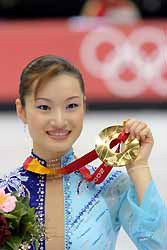
Lately the TVs in Seminar House 4 have been playing constant Winter Olympics coverage, which is at least a change from the American students' constant watching of either MTV or CNN. (Insert gratuitous anti-Americanism here - I frankly can't be bothered.) Japan's big hope for a gold medal in the Games is figure skater Miki Ando. In the run-up to the opening they kept replaying footage of her tearful triumph in a domestic figure-skating event, which I remember seeing on TV at some point last semester. The whole nation is behind her, and I for one can't blame them (see picture, and yes I am that shallow). Figure skating is the one event in the games where providing eye candy for the spectators is an integral part of the competition. It's the beach volleyball of the Winter Olympics. (Incidentally, at the last Olympics the beach volleyball was won by the Swiss. How the hell did that happen?)

UPDATE: Well, Japan won their first gold in the Games for figure skating, which actually went to Shizuka Arakawa (she doesn't look too bad either). As I left Seminar House on Friday morning I saw Ando blubbing on TV, but that could have meant anything - she cries when she wins, and she cries when she loses. I found out later, as the hotel's TV was replaying Arakawa-san's victory over and over again. It's a good weekend for eye candy. More on the onsen trip later.

Labels: ,

Saturday, January 07, 2006

Tokyo memories


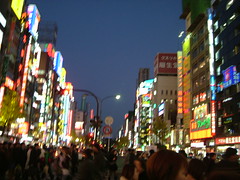
Yasukuni-dori, Shinjuku
Originally uploaded by moorethanthis.
As I said in my last post, it seems like I've been back a lot longer than I have, and now I'm getting ready to head back again. Just a small matter of booking my return ticket, and sorting out where to stay for the few days before Seminar House re-opens, and I'll be gone. The contrast between where I've been and where I am now is just so large that even now I can't really get my head around it. This street scene from Shinjuku, for example, is unlikely to be found replicated in the centre of Cambridge.

Labels: ,

Thursday, August 25, 2005

My second first year

This is only my second full day at Kansai Gaidai. Since I arrived the evening before last, I've been meeting new people, making friends, going out and exploring our new home - and I love it. It's struck me that, in effect, this is my second chance at a first year, and I'm going to use that opportunity to its fullest.

After the flight, we were picked up at the airport by Kansai Gaidai and driven to our dorms. Another student from Leeds was on the same flight as me, so I had someone to keep me company on the journey. As soon as we stepped into Seminar House 4, an immaculate modern building which had been constructed just this year, we were met by students sitting around in the entry hall, where people's shoes were left. Three girls asked me were I was from, and I asked them the same.
"South Africa."
"Lithuania."
"The United States..." And here she looked slightly apolgetic and added, "Sorry."
It occured to me that in the first thirty seconds in my dorm, I'd met more different nationalities than I had in my entire first year at Leeds.

All the international students are living in dorms until the weekend, when those are doing homestay (such as yours truly) move in with their families. The rooms are spacious enough, even with 3-4 people sleeping there, and have tatami mat floors, the awesomeness of which I still can't get over. Seminar House 4 is situated about ten minutes walk away from the campus. Coming out of the building, you turn right and get a view of the typical Japanese skyline of low-roofed traditional houses and blocky modern buildings crowded together, power lines strung between them. You can walk along this road to Kansai Gaidai, some shops further along, or a bus stop that will take you into the centre of Hirakata City. Some photos of the above to follow soon, hopefully.

The campus itself is also quite shiny and new. It seems quite small, but I realise that it must be average-size; it's only small compared to Leeds. I've done the registration thing of many long meetings and even more bits of paper that have to be signed, stamped and filled in to the exact last detail before you can get rid of them. But to the victor, the spoils, and I was officially registered as a student this morning, as well as getting a bank account set up. It's been a lot of activity for two days, and stuff seems to happen a lot quicker.

For example, I ran into a guy and a girl (who were boyfriend and girlfriend from the same university) while looking for info on a course I wanted to register for. Then, while chatting with them and their friends later, I got invited out for dinner. By the evening, I was sitting round a table with five Americans and a Canadian, laughing and joking like they were old friends, when most of us had met each other less than 24 hours ago. It's this kind of thing that makes people want to travel and do things, and keeps anxiety and homesickness at bay. The socialising may well continue tonight, as I was invited by a guy I met in the corridor to a 'typhoon party' at a park near Seminar House 4. The fact that a) I'd never talked to this guy before, and b) he was telling a long and involved story about his diarrhoea when I passed him could temper my enthusiasm, but we shall see.

[NB. All times for my posts from Japan will be adjusted to local time. I don't want you thinking my sleep patterns are all over the place. Even though they are. Uh. Whatever.]

Labels: , ,

Sunday, August 21, 2005

Leaving

Subject is in the title, kids. I'm leaving tomorrow, on JAL's 8pm flight from Heathrow. Am I excited? You bet. Am I scared? You bet some more. But I still wouldn't be doing anything else. I feel like I've had quite a long summer (God knows what a break from late June to late September would do to me), and though I love Histon and Cambridge, I am a little too used to them. I can't wait to spend time living and learning on the other side of the world.

This evening was spent at my friend Matt's house, having dinner with his family. A little act of kindness that I'm immensely grateful for, as I can imagine how I'd feel rattling around in my empty house on my last night. As it is, I'm keeping my nervousness under control. Although that's the thing about being nervous. It only happens until you've got something to keep you busy. I'll be nervous on the bus, in the airport, and on the plane, and then when I land, there'll be so many things to take care of that it will just fade away.

I'd better go and put the finishing touches to my hand luggage, and maybe (gosh!) tidy up the house a bit. An entirely new experience is just round the corner. I can't wait.

Labels: ,

Monday, August 08, 2005

A fortnight to go

This is a little reminder, to myself I guess, that I have two weeks until I go to Japan. My study year abroad being the reason I started this blog in the first place, I thought it deserved at least one mention before I got on the plane. It still hasn't really hit home yet, although when it does, it's usually at night when I'm trying to sleep. Having worried over it for most of this year, I suddenly changed my tune when (strangely enough) an opportunity was offered to stay back in the UK. An odd way to act, I know, but I've found I often work better when I've got something to prove. I started seeing it not as an endurance test but as an experience, which would be some good and some bad, not one or the other. Life as a whole is of course like that, but when you have digital TV, you often forget that life shouldn't entertain you every minute.

[EDIT] At the pub last night, having a few drinks with some old friends from secondary school, someone asked me if I was prepared on the language front. My answer: "Hell no! But since it's best to put on a brave face, I guess I should just say Hell Yes!" I believe that sums up my feelings at this time.

Labels: , ,